Word Go: Word Link Puzzle
- 4.5
- Rating
- 1.00M
- Installs
- Free
- Price
 Analysis by App-foxy
I spent time with Word Go: Word Link Puzzle as a light word game for short breaks, and my first impression was simple: it is easy to understand, quick to start, and more relaxing than demanding. The basic appeal is connecting letters to form words, but the real value is how little preparation it requires. I can open it when I have a few spare minutes, solve a handful of puzzles, and stop without feeling as if I have abandoned a long session.
This is a free word game from Infinite Joy Ltd., aimed at Everyone and available for devices running Android 8.0 or later. It has reached over a million installs, with an average rating of 4.5 from around fourteen thousand ratings and roughly three thousand reviews. Those figures suggest that it has found a substantial audience, although popularity alone does not make it the right choice for every type of word-game player.
How Word Go feels in everyday play
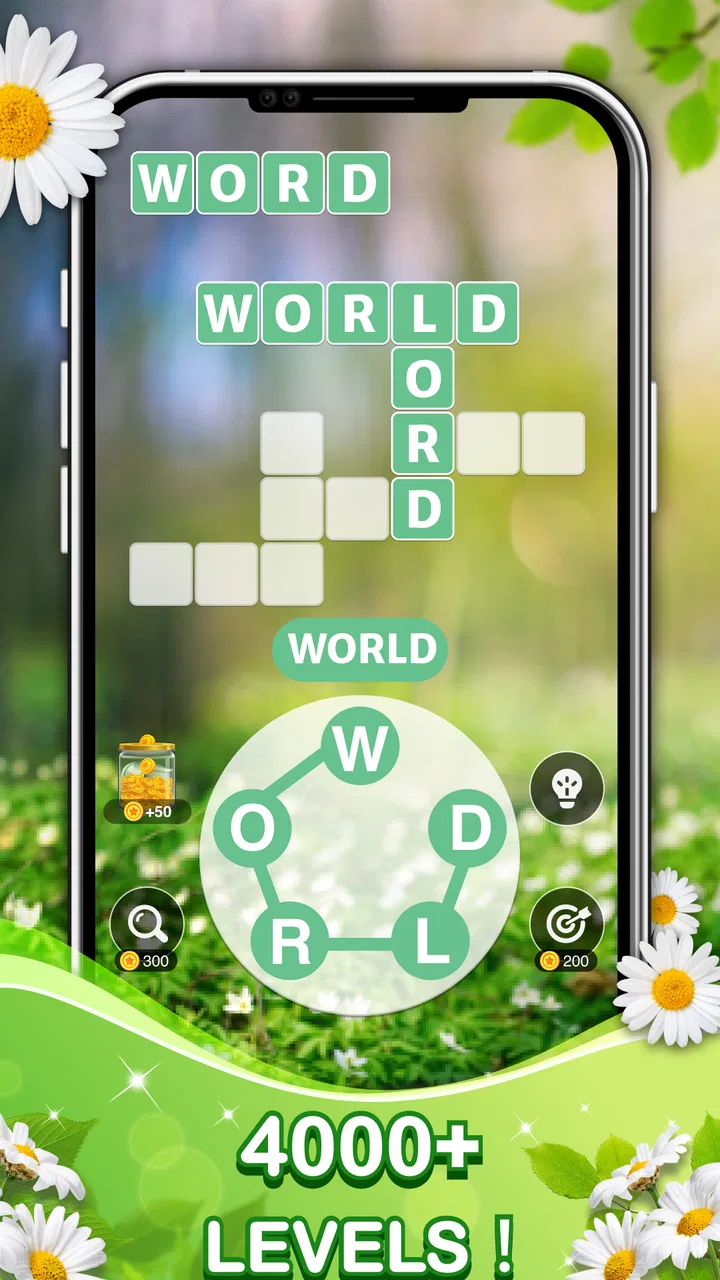
The central loop is familiar: I look at a group of letters, connect them in the right order, and try to uncover the intended words. That makes the game approachable even if I have never played it before. There is no complicated rulebook to study, and the first few attempts are enough to understand what the game expects from me.
You May Also Like

 Blood Strike: 2.5 Anniversary
Blood Strike’s Loadouts Turn Every Drop Into a Tactical Gamble
A close look at Blood Strike’s custom loadouts: how fast access to signature weapons reshapes its battle royale rhythm, rewards preparation, and narrows the gap between fights.

 Pandora - Music & Podcasts
Pandora’s Music Is Easy to Start, but Harder to Recover
Pandora’s strength is its low-effort path from a seed to a station. Its weak spot is how much confidence it asks you to place in connection, setup, and quiet recovery.

 8 Ball Pool
 Is Built on Rivalries, Rematches, and Routine
A close look at the rivalries, rematches, shared routines, and unanswered safety questions that turn a quick pool match into a persistent mobile community.

 Samsung Music
’s Quiet Strength Is Playing What You Already Own
Its reach comes less from spectacle than from dependable access to a personal library. That simplicity is both the app’s strongest retention engine and its ceiling.

 AccuWeather: Weather Radar
AccuWeather Review: A Quick, Clear Forecast for Everyday Decisions
For everyday plans, the best forecast is the one you can understand quickly. AccuWeather makes rain timing, radar, and local conditions easy to act on, with a few trade-offs.

 Hill Climb Racing
Why Hill Climb Racing Still Turns Crashes Into One More Run
A tiny car, a bumpy hill and one more upgrade: Hill Climb Racing keeps resurfacing because its simple chaos makes every near-miss feel personal.
More From Our News Desk



What I like most is the low mental entry cost. I do not need to remember a story, manage a character, or prepare a strategy before starting. The challenge comes directly from spotting possible combinations. Sometimes the answer appears immediately; at other times I need to rearrange my thinking and test less obvious word patterns. That balance makes it suitable for a quiet moment rather than only for a focused gaming session.
A realistic use case is a short wait at a bus stop or a few minutes before an appointment. I can play one puzzle without committing to a long campaign. It also works well as a wind-down activity in the evening, particularly when I want something more engaging than scrolling but less intense than an action game. The store summary describes it as a way to calm and train the brain, and in my experience the calming part is more convincing than any promise of serious language study.
I would not treat it as a replacement for a dictionary, a structured vocabulary course, or a competitive word platform. The game encourages recognition and experimentation, but casual puzzle solving is not the same as systematically learning definitions, pronunciation, spelling rules, or another language. That distinction matters if your main goal is measurable study rather than entertainment.
Speed expectations during normal sessions
Word Go is built around a type of play where responsiveness matters more than visual spectacle. When I tap or connect letters, I expect the result to feel immediate because the action itself is so simple. That makes perceived speed especially important: even a small pause would be more noticeable here than in a game with lengthy animations or complex controls.
For ordinary use, the game feels best when I approach it as a quick puzzle tool rather than a feature-heavy gaming destination. The simple format means I can concentrate on the word in front of me instead of waiting through elaborate transitions. I also appreciate that the game does not demand the kind of sustained attention required by a large strategy title. If I am mentally tired, I can still attempt a puzzle without feeling overwhelmed.
There is a useful trade-off in that simplicity. Players who want a visually rich experience, dramatic presentation, or deep systems may find the pace and format too modest. Word Go’s strength is that it gets out of the way and lets the word challenge carry the session. Its weakness is that people looking for constant novelty may see the same basic interaction as repetitive after extended play.
My practical advice is to use it in small blocks. A short session keeps the letter-linking mechanic fresh and makes the calming quality more noticeable. If I continue for a long period while solving every puzzle in the same way, the activity can start to feel routine. That is not a fault unique to this game, but it is an important expectation to set before downloading it.
What happens during heavier use
The most demanding moment is not a single puzzle; it is prolonged use. A casual word game can feel effortless at first, yet repeated rounds put more pressure on my attention than on my hands. I may begin by solving obvious words and then slow down as I search for alternatives, revisit letter combinations, or decide whether a less familiar word fits the puzzle.
This makes the game surprisingly useful as a mental pause. It gives me something specific to focus on without requiring the emotional investment of a competitive match. However, “calm” does not always mean effortless. A difficult sequence can become frustrating when I am certain that a word is present but cannot see how the letters connect. I prefer that kind of mild frustration to the pressure of a countdown, but players who dislike being stuck may want a different style of word game.
A good workflow is to change how I approach a stubborn puzzle instead of repeatedly dragging through the same guesses. I first look for short, common words, then examine the remaining letters for familiar endings or beginnings. After that, I search for a longer word that may reveal the structure of the puzzle. This is more effective than treating every letter as an isolated possibility, and it turns the game into a small exercise in pattern recognition.
Another useful habit is to stop before the game becomes a chore. Because the sessions are naturally bite-sized, I can leave a puzzle and return later with a clearer mind. That is one of the better reasons to choose this format over a long-form word challenge: the game fits around my day instead of asking me to reorganize my day around it.
Reliability and recovery after interruptions
For a word game, reliability is mostly about whether I can return to the activity without unnecessary friction. A puzzle should not feel like a major commitment, so interruptions are part of the normal experience. I may lock my phone, switch to a message, or close the game because my break has ended. The more naturally I can resume, the better the game fits everyday use.
I judge Word Go primarily as a casual companion rather than a title that needs constant supervision. Its straightforward format helps here because I do not have to reconstruct a complicated plan after stepping away. If I am interrupted while thinking about a word, the puzzle itself gives me a clear point to continue from.
That said, I would still avoid treating any mobile game as the only place to keep important progress or as a substitute for a dedicated offline activity. Phone behavior varies with the operating system, available memory, and what else is running. If an interruption is especially important, I prefer finishing the current puzzle before switching away. This is a sensible habit for any small game, particularly when I am using an older device or moving between several demanding apps.
The current version is 1.24.0, which shows that the game has continued beyond its original release on May 10, 2021. I see that as useful context rather than a guarantee: an established version history can be reassuring, but my own experience will still depend on the phone and operating system I use. The minimum requirement of Android 8.0 also means that compatibility should be checked before installation, especially on older hardware.
One limitation is that the game’s simple nature leaves less room for recovery strategies than a larger game might offer. If a puzzle does not suit my vocabulary or preferred difficulty, I cannot solve that problem through character upgrades or a different play style. The experience depends heavily on whether the particular word challenge feels fair and satisfying to me.
Device constraints and resource expectations
Word Go is a sensible candidate for people who want a modest word-game experience on an Android device that is not running the newest software. Its stated minimum of Android 8.0 gives it a broad compatibility range, though compatibility is not the same as identical performance on every phone. A newer device may feel more comfortable when several apps are open, while an older one may need more patience when the system is already busy.
I would choose it for a secondary phone, a family device, or a personal handset used mainly for everyday tasks and occasional games. The format does not call for the kind of attention I associate with high-end 3D titles. That makes it a better match for someone who values quick access and simple controls over graphical ambition.
Heavy multitasking is where expectations should stay realistic. If I have many apps open, limited free storage, or an older operating system, any game may take longer to launch or recover after being pushed into the background. The responsible way to assess this title is not to assume that its word puzzles guarantee identical behavior everywhere. Instead, I would close unused apps, keep the operating system supported, and allow the game a clean start if it begins behaving sluggishly.
Resource demands also include attention and battery habits, not just hardware. A short puzzle session is easy to fit into a break, but extended play can encourage me to keep the screen active longer than planned. I find it more comfortable to use the game in deliberate bursts, especially when I am away from a charger. That keeps the experience aligned with its strongest use case: a compact mental diversion.
There is another device-related consideration for families. The Everyone age rating makes Word Go broadly approachable, and the word format is less intimidating than many games aimed at older players. Still, a parent should decide whether optional purchases are appropriate on the device. The game is free to download, while its in-app purchases range from $0.99 to $79.99 per item. That wide range is worth noticing before handing a phone to a child, even if the basic game itself costs nothing to start.
Free access, purchases, and who should play
The free entry point is one of the clearest advantages. I can try the core experience without paying upfront, which makes it easy to decide whether the letter-linking style suits me. For a casual player, that lowers the risk of downloading a game that turns out to be too simple or too repetitive.
The presence of in-app purchases changes the recommendation slightly. I would approach the game with a clear personal limit rather than assuming that “free” means the entire experience has no financial decisions attached. If I am installing it on a shared device, I would review the purchase settings first. This is especially important because the listed individual purchase range reaches from less than a dollar to tens of dollars.
Word Go is best for people who enjoy word searches, want a gentle way to occupy short gaps in the day, or prefer games that can be understood immediately. It may also suit someone returning to mobile games after a long break and looking for a low-pressure starting point.
I would skip it if I need advanced vocabulary instruction, head-to-head competition, a rich narrative, or a strong sense of progression beyond solving puzzles. A crossword app may be better for clue-based solving, a spelling trainer may be better for deliberate learning, and a multiplayer word game may be better for social competition. Word Go earns its place by being accessible, not by replacing every other word-game format.
My performance verdict after regular use
My overall view is that Word Go succeeds when I use it for what it is: a compact word-link puzzle game with a calm rhythm and a low learning curve. The straightforward design supports quick starts, short sessions, and simple recovery after an interruption. It is not the kind of game I would choose for demanding visuals or deep strategic variety, but that restraint is also why it can work well on an everyday Android phone.
Infinite Joy Ltd. has made a game that is easy to recommend to a friend who wants a free word activity without a complicated setup. I would mention the optional purchases, the Android 8.0 requirement, and the possibility of repetition during long sessions before recommending it. Those are not deal-breakers for me, but they define the best audience.
The main performance lesson is to keep expectations proportional to the format: this is a light puzzle companion, not a high-intensity gaming platform. Used in short bursts, it feels focused and convenient. Used for extended periods, its repeated structure may become less engaging, and device conditions will matter more than the simple controls suggest.
With an average rating of 4.5 and more than a million installs, it has clearly attracted plenty of interest. I would not use those figures as a substitute for personal taste, but they fit my conclusion: Word Go is worth trying if you want an uncomplicated word game that fits into spare minutes. If your priority is serious vocabulary growth, competitive play, or elaborate content, another category of app will serve you better.
FAQs for Word Go: Word Link Puzzle
01What is Word Go: Word Link Puzzle?
Word Go: Word Link Puzzle is a captivating word puzzle game available for both Android and iOS platforms. It challenges players to connect letters and form words, offering various levels of increasing difficulty. The game is designed to enhance vocabulary and cognitive skills, making it both entertaining and educational.
02How do I play Word Go: Word Link Puzzle?
Playing Word Go: Word Link Puzzle is simple and engaging. You need to swipe across the screen to connect letters and form words. Each level presents a grid of letters, and your goal is to find all possible words. The game starts easy but becomes more challenging as you progress, requiring creative thinking and vocabulary skills.
03Are there any in-app purchases in Word Go: Word Link Puzzle?
Yes, Word Go: Word Link Puzzle offers in-app purchases. While the game is free to download, players can buy hints or remove ads through purchases. These options enhance gameplay by providing solutions to challenging puzzles or creating an uninterrupted gaming experience. However, purchases are optional, and you can enjoy the game without spending money.
04Does Word Go: Word Link Puzzle require an internet connection?
No, Word Go: Word Link Puzzle can be played offline. This feature makes it convenient for gaming on the go, especially in places where internet access is limited. However, certain features like in-app purchases or updates might require an internet connection. Enjoy uninterrupted gameplay without worrying about connectivity issues.
05What age group is Word Go: Word Link Puzzle suitable for?
Word Go: Word Link Puzzle is suitable for a wide range of age groups, typically from children to adults. The game’s design is family-friendly, with simple mechanics and an educational twist that helps improve vocabulary. It’s a great option for anyone looking to challenge their language skills while having fun.
Pros
- Engaging puzzles boost vocabulary
- User-friendly interface for all ages
- Offline play available
- Daily challenges for extra rewards
- Minimal ads enhance gameplay
Cons
- Limited hints in free version
- Repetitive levels can be tedious
- In-app purchases can be pricey
- No multiplayer features
- Occasional lag on older devices

Word Go: Word Link Puzzle
Gallery